



























































































































































3 Best Weight Training Tips for Beginners
Author: RVLNSV PRASAD
Updated On: August 2026
About Us
Author Bio
Editorial Policy
Contact Us
Author Note
This article was written by RVLNSV PRASAD to provide practical, easy-to-understand information for people who are new to weight training. The focus is on learning basic movement patterns, choosing an appropriate starting resistance, progressing gradually, and allowing enough time for recovery.
The recommendations are intended as general educational guidance rather than individualized medical or exercise prescriptions. Fitness levels, previous injuries, health conditions, and training goals vary from person to person. Beginners who have health concerns or are unsure whether a particular exercise is appropriate should consider speaking with a qualified healthcare or fitness professional.
Quick Answer
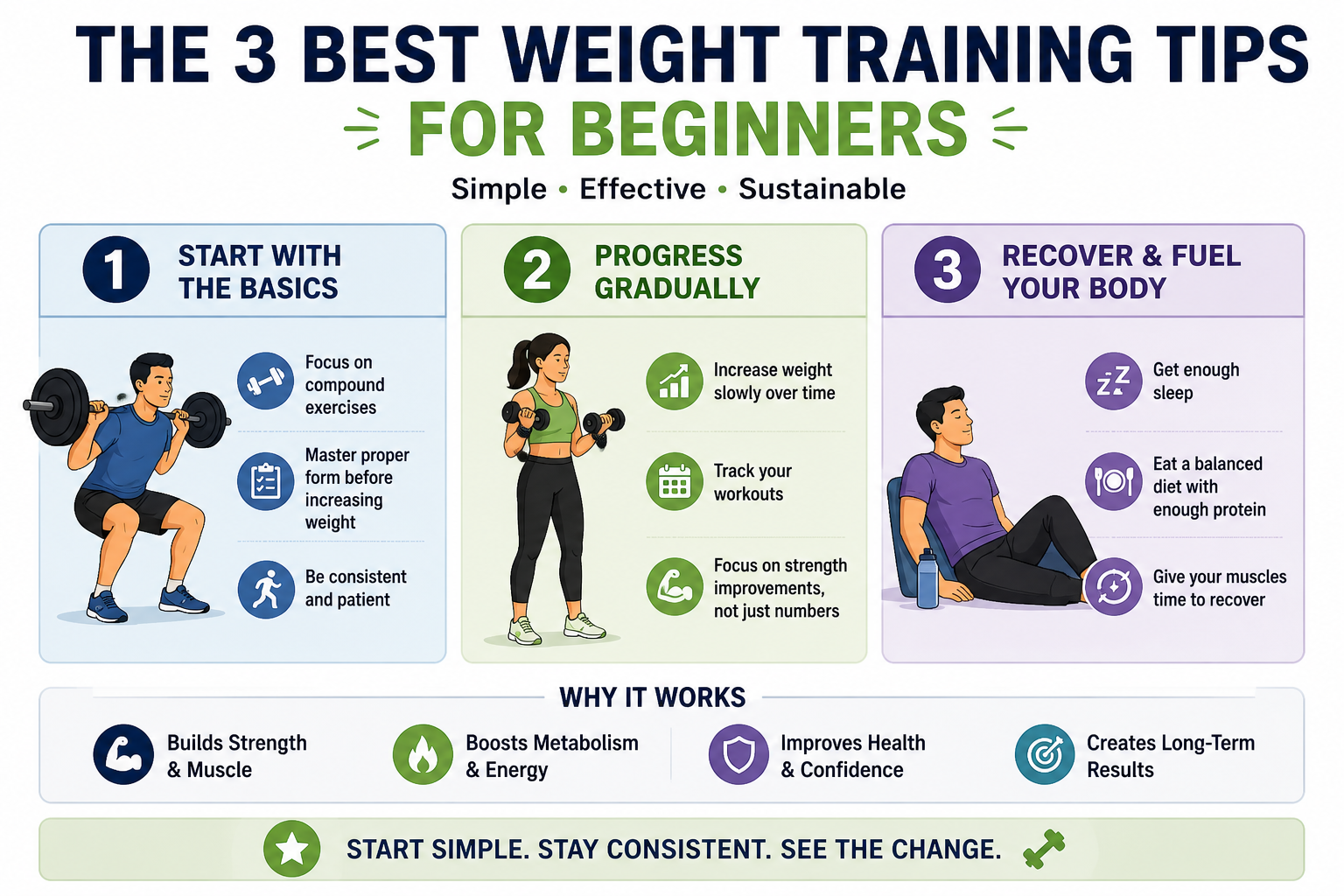
The most useful beginner weight training tips are simple: learn proper form, start with an appropriate resistance, and progress gradually while staying consistent. You do not need to begin with heavy weights or complicated gym routines.
A well-designed beginner program can include exercises that train the major muscle groups two or more days per week, with enough recovery between sessions. The CDC recommends that adults include muscle-strengthening activity involving all major muscle groups on at least two days each week. CDC: Physical Activity Basics
Introduction
Starting weight training can feel intimidating when you have never used dumbbells, resistance machines, or barbells before. You may wonder how much weight to lift, how many exercises to perform, or whether your technique is correct.
The good news is that beginners do not need a complicated workout to start building strength.
The most important foundations are proper technique, an appropriate starting resistance, gradual progression, and adequate recovery. These principles apply whether you train at a gym, exercise at home with dumbbells, or use bodyweight movements.
Weight training is also not limited to bodybuilding. Resistance exercise can help improve muscular strength and physical function, making everyday activities such as carrying groceries, climbing stairs, lifting objects, and getting up from a chair easier.
This guide focuses on three practical beginner weight training tips and explains how to turn them into a simple, sustainable training routine.
What Is Weight Training?
Weight training is a form of resistance exercise in which your muscles work against an external resistance or your own body weight.
The resistance might come from:
- Dumbbells
- Barbells
- Weight machines
- Resistance bands
- Kettlebells
- Cable machines
- bodyweight exercises
Strength training and resistance training are closely related terms. The basic purpose is to challenge muscles so the body can adapt to the training stimulus over time.
Beginners do not have to choose the most advanced equipment. A chair squat, wall push-up, resistance-band row, or light dumbbell exercise can provide a useful starting point.
The best option is usually the one that allows you to learn the movement safely and consistently.
Why Weight Training Matters for Beginners
Resistance training offers benefits beyond building visible muscle.
Regular strength training can help support:
- Muscular strength
- Physical function
- Bone health
- Balance and mobility
- Healthy aging
- Ability to perform everyday activities
- Overall physical fitness
The U.S. Department of Health and Human Services includes muscle-strengthening activity as an important part of overall physical activity for adults. Physical Activity Guidelines for Americans
Mayo Clinic also notes that weight training can help build strength and muscle while providing a structured way to improve physical fitness. Mayo Clinic: Weight Training
You do not need to become a bodybuilder to benefit from resistance exercise.
My Personal Experience With Weight Training
I remember feeling uncomfortable when I first started training in a gym. Other people appeared stronger and more experienced, while I was still learning how to use different machines and perform basic exercises.
Instead of trying to match the weights used by other people, I started with lighter resistance and concentrated on learning the movements.
Over time, I became more comfortable with the exercises and gradually increased the resistance. I also noticed that everyday tasks felt easier and that my confidence improved.
That experience taught me an important lesson: beginner strength training is not a competition.
Your starting point does not matter as much as learning the movements, progressing at an appropriate pace, and staying consistent.
This is personal experience, not proof that every beginner will achieve the same results. Individual progress depends on training history, genetics, nutrition, recovery, age, and other factors.
The 3 Best Weight Training Tips for Beginners
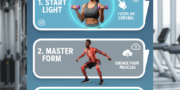
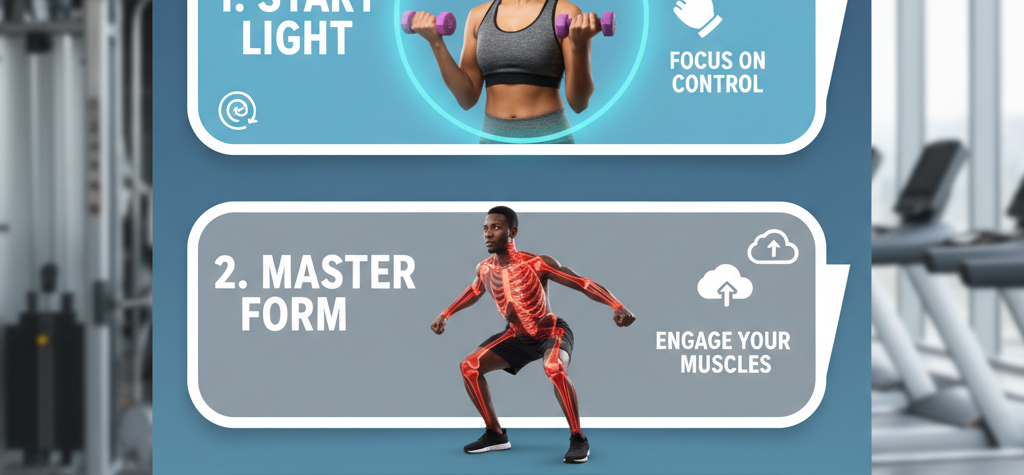
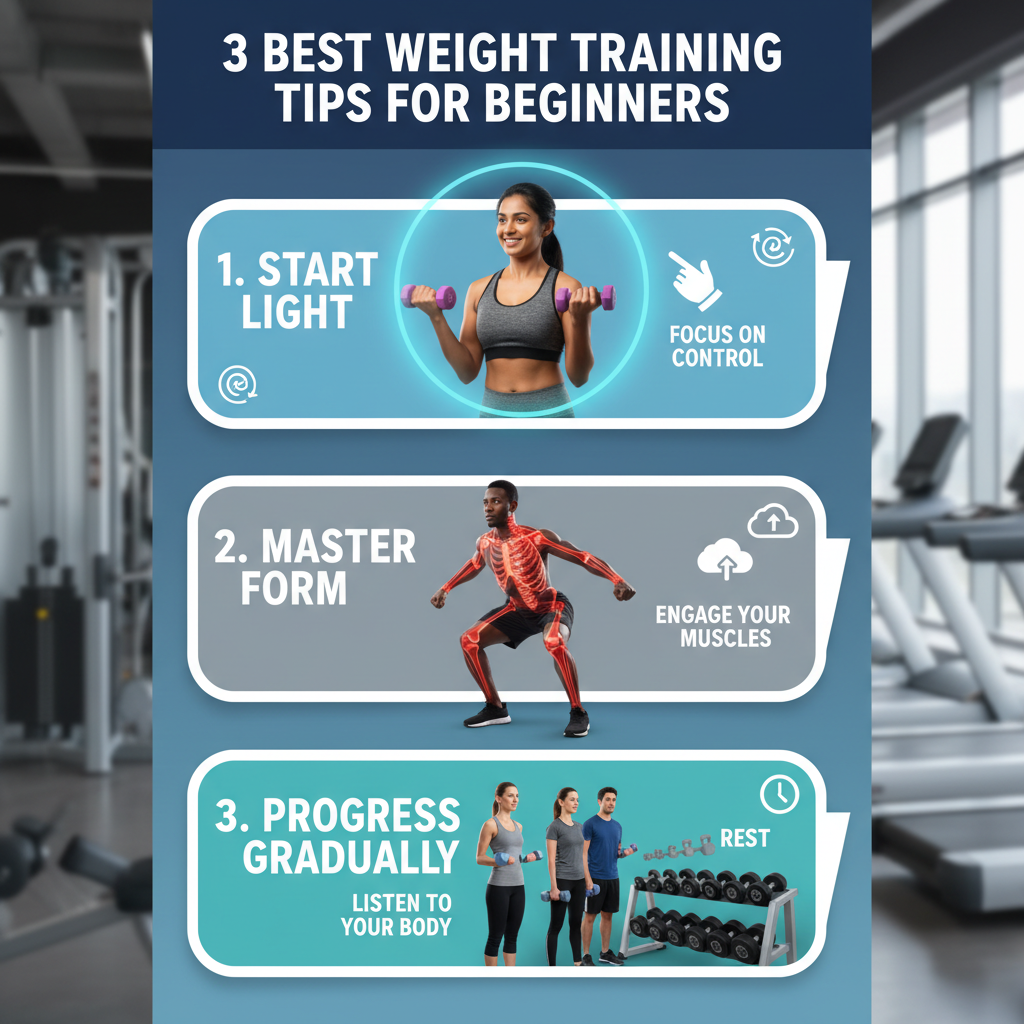
1. Learn Proper Form Before Adding More Weight
Proper technique should come before chasing heavier weights.
Good form means controlling the movement in a way that is appropriate for the exercise rather than trying to lift more weight than you can manage.
For beginners, this means learning basic movement patterns such as:
- Squatting
- Hinging at the hips
- Pushing
- Pulling
- Lunging
- Bracing the core
You do not need perfect technique on your first attempt. Learning gradually is part of the process.
Why form matters
When you are learning a new exercise, lighter resistance gives you more opportunity to concentrate on the movement.
For example, when learning a squat, you might begin with a bodyweight squat or chair squat before adding dumbbells.
When learning a dumbbell row, you can first practice controlling the movement and keeping the exercise stable before increasing resistance.
The goal is not to make every movement look identical for every person. Body proportions, mobility, training experience, and the exercise itself all affect technique.
A simple rule
Learn the movement first. Add resistance gradually.
If increasing the weight causes your technique to break down substantially, the resistance may be too challenging for that stage of training.
Example: Learning a Squat
A beginner can start with a bodyweight squat.
Focus on:
- Keeping your feet stable
- Moving under control
- Maintaining a comfortable range of motion
- Keeping your torso controlled
- Standing up smoothly
Once the movement becomes comfortable, you can progress to a more challenging variation or add resistance.
If you have pain during an exercise, do not simply assume that pushing through it is the correct approach. Stop and seek appropriate guidance if the pain is significant or persistent.
2. Start With an Appropriate Weight
One of the most common beginner mistakes is assuming that heavier weights automatically produce better results.
They do not.
The appropriate starting resistance depends on the exercise and the individual.
A beginner’s starting weight can be influenced by:
- Previous exercise experience
- Current strength
- Age
- Exercise selection
- Technique
- Mobility
- Injury history
- Training goals
Instead of asking, “What is the heaviest weight I can lift?“ Ask:
“What resistance allows me to perform this exercise with controlled technique while still providing an appropriate challenge?”
That is a much better starting point.
Signs that the weight may be too heavy
The resistance may be excessive if:
- Your technique changes dramatically
- You have difficulty controlling the movement
- You use momentum to complete repetitions
- Your range of motion becomes unnecessarily limited
- You cannot perform the exercise as instructed
- You experience significant pain
Starting with an appropriate resistance does not mean staying with the same weight forever.
As your strength and technique improve, you can gradually increase the challenge.
Should Beginners Use Light Weights?
Beginners generally do not need to start with very heavy weights.
However, saying “light weights are always best” is also too simplistic.
A better approach is to choose a resistance that matches your current ability and allows you to learn the exercise properly.
For one person, a pair of light dumbbells may be challenging. Another person with previous training experience may need more resistance.
The goal is appropriate resistance, not simply the lightest possible weight.
3. Progress Gradually and Stay Consistent
The third principle is consistency.
A beginner may train extremely hard for one week and then stop for several weeks. That approach is usually less useful than following a manageable routine over time.
Your body needs repeated training exposure to adapt.
What is progressive overload?
Progressive overload means gradually increasing the challenge placed on your muscles as your body adapts.
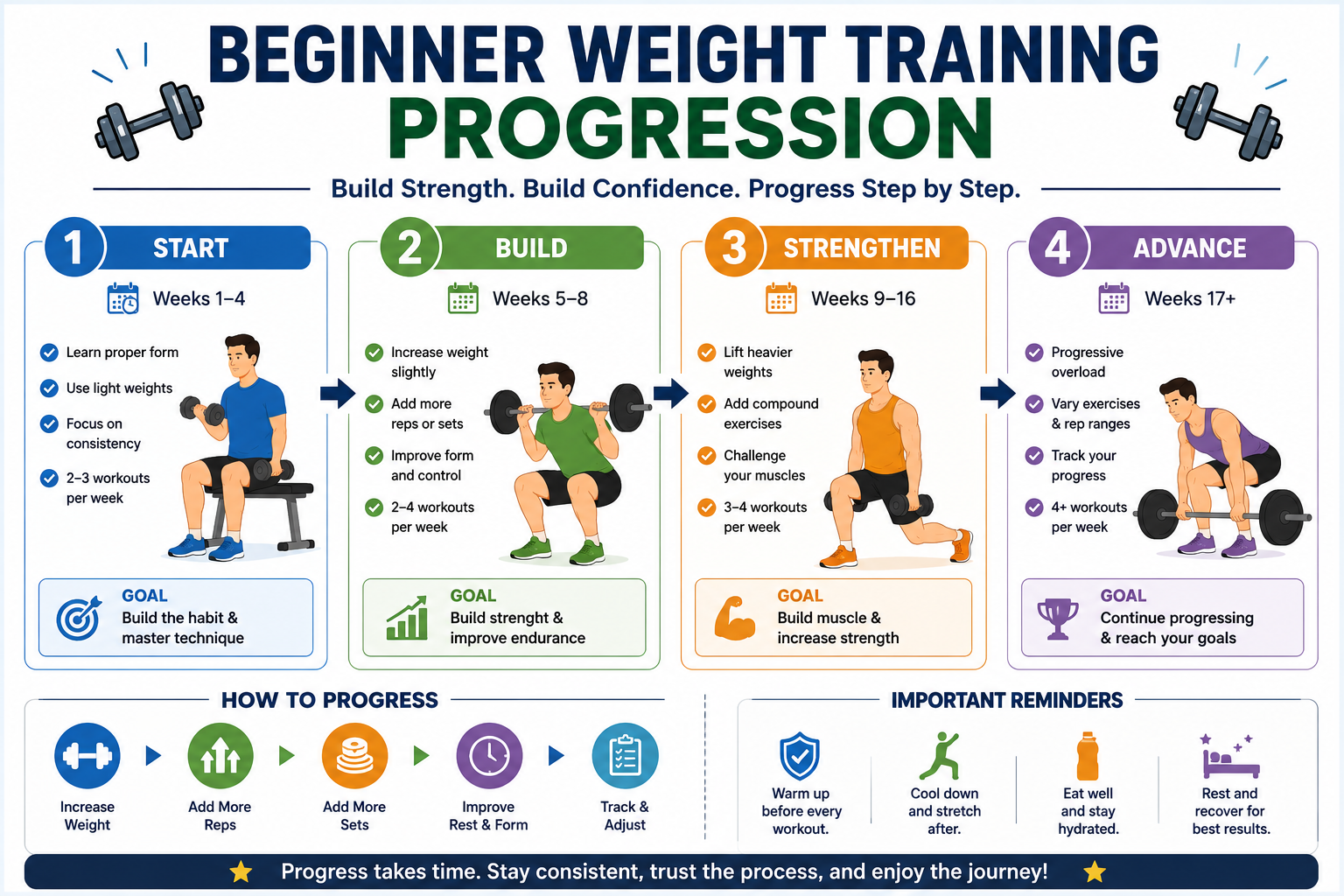
Progress can come from:
- Adding a small amount of resistance
- Performing more controlled repetitions
- Adding a set
- Improving exercise technique
- Increasing the difficulty of an exercise
- Improving your range of motion where appropriate
You do not need to increase everything at once.
For example, if you can comfortably perform an exercise with the same resistance and good technique for several sessions, you might make a small adjustment rather than making a dramatic jump.
Consistency matters more than rushing.
Your goal should not be to become as strong as possible in the shortest possible time.
Instead, focus on building a routine that you can maintain.
Progress can be gradual.
Some weeks may feel easier than others because sleep, stress, nutrition, workload, and other factors can affect performance.
How Much Weight Should a Beginner Lift?
There is no single starting weight that is appropriate for every beginner.
A 20-year-old with previous athletic experience and a 60-year-old who has never performed resistance exercise may require very different starting points.
Even within the same person, different exercises require different resistance levels.
For example, the weight you can safely use for a leg exercise may be very different from the weight you can control during a shoulder exercise.
Start with an appropriate resistance and prioritize technique.
If you are completely unfamiliar with resistance training, learning from a qualified fitness professional can be particularly useful.
How Often Should Beginners Lift Weights?
A practical starting point for many adults is two or three resistance-training sessions per week, provided they can recover appropriately.
The CDC recommends muscle-strengthening activities involving all major muscle groups on at least two days per week for adults. CDC Physical Activity Guidelines
Beginners do not necessarily need to train every day.
A simple schedule could be:
| Day | Activity |
| Monday | Full-body strength workout |
| Tuesday | Rest or light activity |
| Wednesday | Full-body strength workout |
| Thursday | Rest or light activity |
| Friday | Optional full-body workout |
| Saturday | Light activity or recovery |
| Sunday | Rest |
Your schedule should be adjusted according to your fitness level, recovery, and other physical activities.
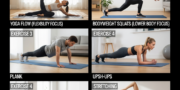
A Simple Beginner Full-Body Workout
A full-body routine can be a practical way for beginners to train several major muscle groups without needing a complicated split routine.
Example workout
- Squat or chair squat
Practice controlled lower-body movement. - Push-up or modified push-up
Train pushing muscles in the upper body. - Dumbbell row
Train pulling muscles in the upper body. - Hip-hinge exercise
Learn the basic movement pattern used in exercises such as deadlift variations. - Dumbbell press
Practice an upper-body pushing movement. - Plank or another beginner-friendly core exercise
Train trunk stability.
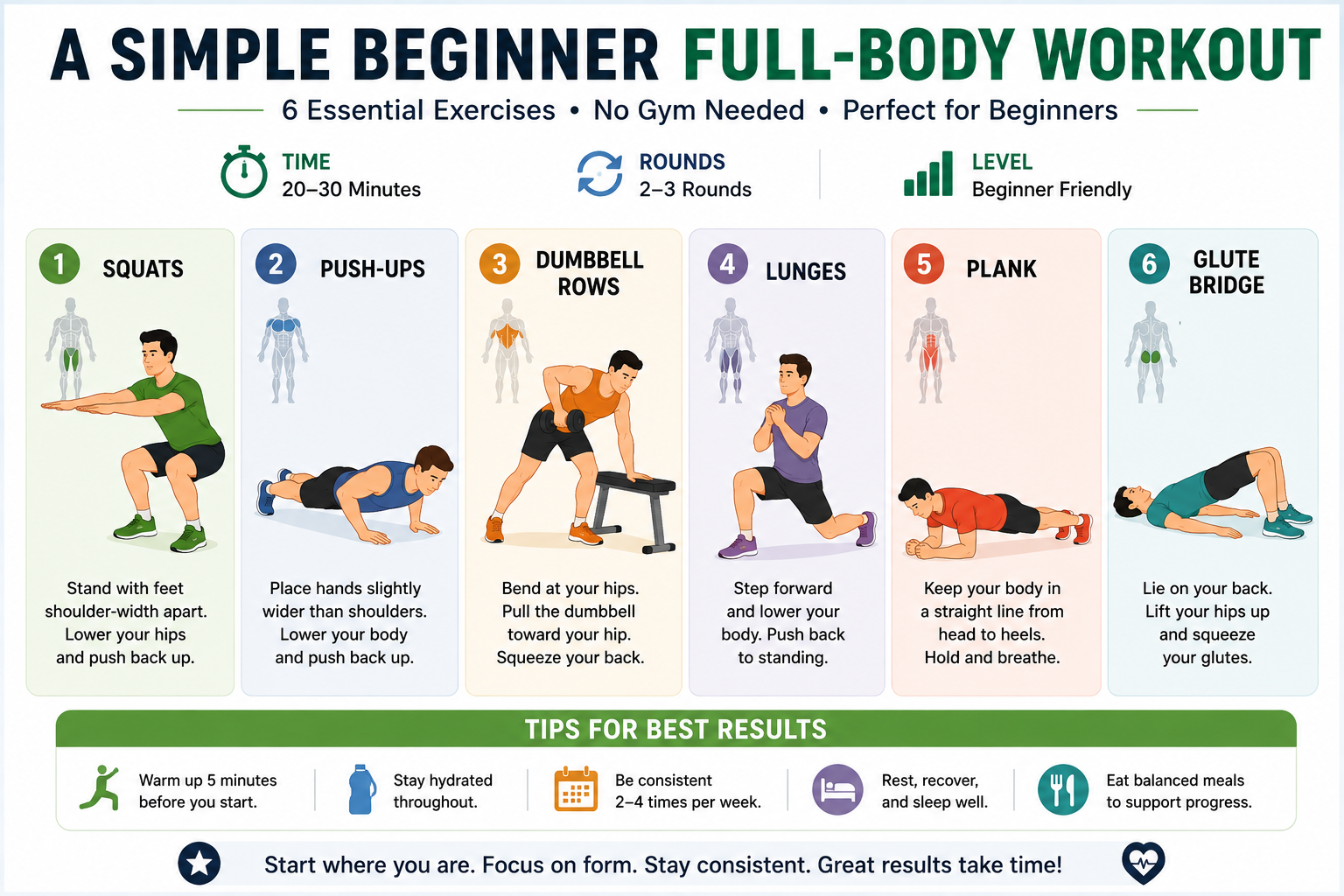
A beginner could start with a small number of sets and controlled repetitions rather than trying to perform a large volume of exercise immediately.
The exact number of sets, repetitions, and resistance should depend on your ability and the exercise.
Warm-Up Before Weight Training
A warm-up can help prepare you for the activity ahead.
It does not need to be complicated.
A beginner might spend several minutes performing easy movement followed by exercise-specific preparation.
Examples include:
- Walking
- Gentle cycling
- Arm movements
- bodyweight squats
- Light practice repetitions of the planned exercise
The purpose is to transition gradually into the workout rather than immediately beginning with your hardest effort.
Rest and Recovery Matter
Training provides a stimulus, but recovery allows your body to respond to that training.
Recovery includes:
- Rest between workouts
- Adequate sleep
- Balanced nutrition
- Sufficient hydration
- Managing overall training volume
You do not need to feel extremely sore after every workout for the session to be effective.
If you are constantly exhausted or your performance is declining, your training schedule may need adjustment.
Sleep is also important for general health and recovery. If you are interested in improving your sleep routine, see our guide to better sleep habits.
Nutrition for Beginner Weight Trainers
Nutrition supports your ability to train and recover.
A balanced eating pattern can include:
- Protein-rich foods
- Vegetables
- Fruits
- Whole grains or other carbohydrate sources
- Healthy fats
- Adequate fluids
Protein is particularly important because it provides amino acids used by the body to build and maintain tissues.
Good food sources include:
- Eggs
- Fish
- Chicken
- Beans
- Lentils
- Greek yogurt
- Milk or other suitable dairy foods
- Nuts and seeds
You can learn more about practical ways to increase protein intake in our guide to increasing protein intake.
Protein supplements are not automatically necessary. Many people can obtain adequate protein from ordinary foods, although individual requirements vary.
Weight Training for Everyday Life
Strength training is not only about appearance.
Improving muscular strength can make everyday physical tasks more manageable.
For example, strength can help with:
- Carrying groceries
- Climbing stairs
- Moving household objects
- Getting up from a chair
- Carrying luggage
- Maintaining physical independence
This practical side of strength training is sometimes overlooked.
A beginner does not need to become a competitive lifter to benefit from becoming stronger.
Weight Training and Healthy Aging
Resistance exercise can also be useful as people get older.
Maintaining muscle strength and physical function becomes increasingly important for everyday independence.
Older beginners can still participate in strength training, but exercise selection and progression may need to account for balance, mobility, existing health conditions, and previous injuries.
The CDC includes muscle-strengthening activity as part of recommended physical activity for adults and older adults. CDC: Physical Activity Guidelines
If you have a medical condition or have been inactive for a long period, consider discussing your planned exercise program with a healthcare professional.
Common Weight Training Mistakes Beginners Should Avoid
1. Starting Too Heavy
Trying to lift more weight than you can control makes it harder to learn good technique.
Start at a manageable level and progress gradually.
2. Copying Advanced Lifters
An experienced lifter’s workout may not be appropriate for someone who is just starting.
Build your own foundation first.
3. Ignoring Technique
A heavier weight is not an improvement if you cannot control the exercise properly.
4. Training Every Day
More training is not automatically better.
Your body needs recovery.
5. Changing Programs Too Frequently
Give a sensible beginner routine enough time to evaluate your progress instead of changing exercises every few days.
6. Expecting Immediate Results
Strength and fitness develop over time.
Avoid judging your progress based on another person’s body or social media photographs.
7. Ignoring Pain
Normal muscular effort and significant pain are not the same thing.
Stop an exercise that causes concerning pain and seek appropriate advice when necessary.
My Honest Opinion About Gym Culture
Modern fitness culture can sometimes make beginners feel that they need to lift heavy weights, build a certain physique, or train intensely every day.
That is unnecessary.
Your first goal should be learning how to move confidently and safely.
You do not need to compare your starting point with someone who has been training for years.
Progress should be measured against your own previous performance.
For me, learning to use lighter resistance first made weight training feel much less intimidating. That experience reinforced the value of patience and consistency.
When Should a Beginner Get Professional Guidance?
Weight training is appropriate for many people, but individual circumstances matter.
Consider getting professional guidance if you:
- Have a significant injury
- Experience persistent joint or muscle pain
- Have a known heart or other medical condition
- Have recently had surgery
- Have been inactive for a long period and have health concerns
- Are unsure how to perform an exercise
- Are returning to exercise after an injury
- Are unsure whether a particular exercise is appropriate for you
A healthcare professional can help determine whether you need medical clearance or specific modifications.
A qualified fitness professional can also help beginners learn exercise technique and create a program appropriate for their experience level.
Frequently Asked Questions
1. What are the best beginner weight training tips?
The most useful principles are learning proper technique, starting with an appropriate resistance, and progressing gradually while staying consistent. Beginners do not need to begin with heavy weights or complicated workouts.
2. How much weight should a beginner lift?
There is no universal starting weight. Choose a resistance that allows you to perform the exercise with controlled technique while providing an appropriate challenge. The correct starting point varies by person and exercise.
3. How many days a week should a beginner lift weights?
Many beginners can start with two or three resistance-training sessions per week, depending on their fitness level and recovery. The CDC recommends muscle-strengthening activity involving all major muscle groups on at least two days per week for adults. CDC: Physical Activity Guidelines
4. Should beginners use machines or free weights?
Both can be useful. Machines can provide a stable movement path, while dumbbells and other free weights require more control. Beginners can choose equipment that allows them to learn movements comfortably and safely.
5. Do beginners need to lift heavy weights?
No. Beginners do not need to start with very heavy weights. The priority is learning the movement and choosing resistance that can be controlled with good technique.
6. How long does it take to see strength improvements?
The timeline varies. Beginners may notice improvements in exercise performance as they practice consistently, but individual progress depends on training experience, recovery, nutrition, age, and other factors.
7. Do beginners need protein supplements?
Not necessarily. Many people can obtain adequate protein through foods such as eggs, dairy products, fish, poultry, beans, lentils, and other protein-rich foods. Supplements may be useful in some circumstances, but they are not automatically required.
8. Is weight training safe for beginners?
Resistance training can be safe and beneficial for many beginners when exercises are performed appropriately. People with injuries, medical conditions, or concerns about exercising safely should seek individualized guidance before beginning a new program.
Key Takeaways
- Learn proper form before trying to lift heavier weights.
- Choose an appropriate resistance for your current ability.
- Progress gradually rather than rushing.
- Train consistently while allowing adequate recovery.
- Use a balanced diet to support training and recovery.
- Do not compare your progress with advanced lifters.
- Seek professional guidance when health conditions or injuries may affect exercise safety.
Conclusion
The best beginner weight training tips are not complicated.
Start by learning the movement. Choose a resistance you can control. Then gradually increase the challenge as your strength and confidence develop.
You do not need to lift the heaviest weights in the gym, train every day, or follow an advanced bodybuilding program to make progress.
A simple full-body routine performed consistently can provide a strong foundation for improving strength and physical fitness.
Give your body time to adapt, prioritize recovery, and focus on progress rather than perfection.
Most importantly, make weight training a sustainable part of your lifestyle rather than a short-term challenge.
Medical and Fitness Disclaimer
This article is intended for general educational and informational purposes only. It is not a substitute for individualized medical advice, diagnosis, treatment, or exercise prescription.
Exercise may not be appropriate for everyone. If you have a medical condition, significant pain, an injury, have recently undergone surgery, or are unsure whether weight training is appropriate for you, consult a qualified healthcare professional before starting a new exercise program.
Stop exercising and seek appropriate medical attention if you experience concerning symptoms such as chest pain, fainting, severe shortness of breath, or significant pain.
Sources
- CDC — Physical Activity Basics and Guidelines
- U.S. Department of Health and Human Services — Physical Activity Guidelines for Americans
- Mayo Clinic — Weight Training
- NHS — Strength Exercises
Related Topics
10 Best Core Exercises for Beginners at Home: Build a Stronger Core Without Equipment
HIIT Workouts for Beginners: How to Start and See Results Fast
6 12 25 Workouts: The Muscle-Building Secret Behind This Brutal Hypertrophy Method
8 Lower Back Stretches That Actually Work for Pain and Mobility
Full Abs Workout at Home: Daily Routine to See Results in 30 Days









[…] The 3 Best Beginners Weight Training Tips […]
[…] The 3 Best Beginners Weight Training Tips […]
[…] The 3 Best Beginners Weight Training Tips […]
[…] The 3 Best Beginners Weight Training Tips […]
[…] The 3 Best Beginners Weight Training Tips […]
[…] The 3 Best Beginners Weight Training Tips […]
[…] The 3 Best Beginners Weight Training Tips […]
[…] The 3 Best Beginners Weight Training Tips […]
[…] The 3 Best Beginners Weight Training Tips […]
[…] The 3 Best Beginners Weight Training Tips […]
[…] The 3 Best Beginners Weight Training Tips […]
[…] The 3 Best Beginners Weight Training Tips […]
[…] The 3 Best Beginners Weight Training Tips […]